Monday, 8 December 2014

Rss Feed

I chose this website because it has a whole range on ancient Egypt. The website is so amazing because it is based on Egypt alone and includes video's of people who have gone there and it gives you an idea of what Egypt was like then and now, that's what i want my client to see the difference between then and now, how Egypt was once so great and full of wealth and power to now have barely anything. The website is primary because you can recieve information from people who have just been there, its a great source.


Ancient Egypt's History - 3,000 Years of Ancient Egyptian Civilization 2014, Mai, accessed 17 November 2014, <http://www.experience-ancient-egypt.com/ancient-egypt-history.html>.

viewed 16 November 2014

Tuesday, 25 November 2014


Great Website to Use

http://www.bbc.co.uk/history/ancient/egyptians/

This website is from the BBC website and is about the ancient Egyptians and is placed into different categories to make the search easier to find. its related to this blog because it relates to the afterlife of the Egyptian people which is the main subject of this blog. 


I choose it because it gives reliable information for my topic the BBC has a greater selction and has different authors who go into great depth of knowledge to give their readers a broader and wiser knowledge of the ancient world, and that is why i chose this website for my client because I want them to have the same experience.  


BBC 2014, History Egyptians, British Government, United Kingdom, accessed 26 November 2014, http://www.bbc.co.uk/history/ancient/egyptians/.
viewed 26-November-2014 

Book of Ancient Egypt

Pamela Bradley's Ancient Egypt: Reconstructing the Past is such a great book because it covers almost everything on ancient Egypt and the Afterlife. The book itself is easy to understand and not to hard to read it carries an index and a dictionary if you do not understand the term of a word. What this book a great source to use in any project or interest is that Pamela Bradley is a author and historian so you can just trust that what she has written she trustworthy.

This book was chosen for a very good reason, it relates so much to Egypt, as it explains in the title


Ancient Egypt: Reconstructing the Past n.d., Picture, Booktopia, accessed 17 November 2014, <http://covers.booktopia.com.au/big/9780521776561/ancient-egypt.jpg>.       
 Bradley, P 1999, Ancient Egypt: Reconstructing the Past, Cambridge University Press, Port Melbourne, Australia.         


Viewed 26-November- 2014


The Osiris Myth


This YouTube video explains the Osiris Myth very well and how Orions Belt lines up with the Pyramids of Giza and the Nile as the Milkyway. I chose this video because it also explains the creation of life the way the ancient Egyptians saw it, it is so interesting and creative how they viewed different things I choose this clip because it talkes a lot of the Afterlife and how it started and the importance and the what the ancient Egyptians believed as the Golden Age which was when the gods ruled Egypt, this explains about the pharaoh's and why they are thought to be half gods from Horus, the divine child of Isis and Osiris. My required outcome was to let my client see how important the afterlife is and here it from experts who have a wider knowledge. Myths of Mankind, chose all kinds of different topics and the people who they chose are experts in the fields such as authors, historians, even those who lived in that time who written what they knew like: Imhotep was chief architect to the Egyptian pharaoh Djoser (reigned c.2630 - c.2611 BC). He was responsible for the world's first known monumental stone building, the Step Pyramid at Sakkara and is the first architect we know by name and recognized as the world's first doctor , a priest,. scribe , sage, poet, astrologer, and a vizier and chief minister. Herodotus was a Greek historian who was born in Halicarnassus, Caria and lived in the fifth century BC, he travelled to Egypt and wrote a lot about their religion, mummification. Imohotep and Herodotus, were primary sources in Egypt and witnessed so much. Imohotep is mentioned in Myths of Mankind. Unfortunely i cannot find out when this video was published. Myths of Mankind, is a documentary series which looks at some of the world's greatest legends mystical and magical stories which have been told for thousands of years.
Dunn, J 2011, About Egyptian Pyramids, N.s., accessed 26 November 2014, <http://www.touregypt.net/featurestories/imhotep.htm#ixzz3LGE4yCKo>. 

Oostra, R n.d., Myths of Mankind: The Osiris Myth, online video, 12 January, accessed 26 November 2014, <https://www.youtube.com/watch?v=LSKzpOj-VV>.


Viewed 26-November-2014
By Myths of Mankind.
Spells and Amulets. 

 Amulets
Amulets were worn by both the dead and the living. For the dead, they helped to protect them on their way to the afterlife.The amulets were often in the shape of animals, plants, sacred objects, or hieroglyphic symbols. The combination of shape, color and material were important to the effectiveness of an amulet.
One of the most widely worn protective amulets was the wedjat eye: the restored eye of Horus. It was worn by the living, and often appeared on rings and as an element of necklaces. It was also placed on the body of the deceased during the mummification process to protect the incision through which the internal organs were removed.
The scarab (beetle) was an important funerary amulet, associated with rebirth, and the heart scarab amulet prevented the heart from speaking out against the deceased. 
One of the most important amulets would be the Egyptian Ankh which was the symbol of eternal life, in Egyptian paintings mainly in tombs the gods of the afterlife are seen wearing or holding the Ankh.   
I have chosen this topic on Spells and Amulets because in the Egyptian Afterlife they needed these amulets to help guard them on there way to the afterlife.

Spells
Spells were mainly used from the Book Of the Dead. The Book of the Dead is an ancient Egyptian funerary text, used from the beginning of the New Kingdom (around 1550 BCE, 'Before the Common Era') to around 50 BCE. The original Egyptian name for the text is translated as "Book of Coming Forth by Day".


Unfortunately in the Old Kingdom before the Middle Kingdom of Egypt, it was only Pharaohs allowed to have a piece of the Book of the Dead in their sarcophagus. Happily things turned around for the people of Egypt, they were no longer to be buried in deshret or red land, they were declared to have proper funeral rites.


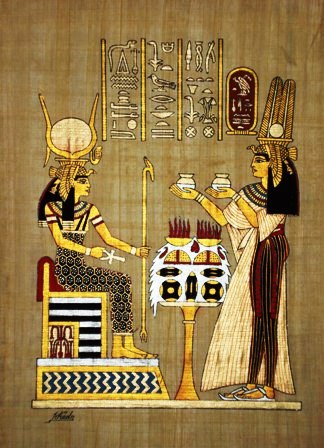
the images represent the wedjat eye, the ankh with the Egyptian Goddess, Hathor, Horus' wife and the scarab beetle


I have chosen this topic because it represents the afterlife, it shows what kind of things the ancient Egyptians believed in and how important it was to them. I chose Pamela Bradley because she is a historian who has studied Egypt for a very long time and I believe that this topic is a great choice for clients and the book has a lot od information on spells and amulets why they were worn, who wore them and she focuses a lot around these types of questions, and these questions that she focuses around makes you understand so much about the Egyptian way of life in such simple terms so if your audience doesn't understand much about Egypt they will be able to.

The photo's were from my pinterest account


Bradley, P 1999, Ancient Egypt: Reconstructing the Past, Cambridge University Press, Port Melbourne, Australia.

Tuesday, 18 November 2014


Egypt.
One of the most powerful civilisations of the ancient world. Ruled by pharaohs and influenced by their gods.

Many people believed that the Egyptians based their life around death, when actually they considered death apart of life and when they were close to death they did not fear it, they took the afterlife very seriously and knew that when they would die they would either be welcomed and in live in eternal peace or forever be punished in the Fields of Punishment. They knew that death was part of life.

The way of the Egyptian life was based around the annual flood of the Nile. Every year at the same time the Nile flooded. This annual flood, referred to as the inundation, was without doubt the most important event in the lives of the Egyptian people. It sustained life along the valley. 

I chose this information because, Pamela Bradley is a well known historian and author, and is an expert which would be good information for the client to have. The picture has a lot of pictures to do with Egypt like temples, gods, pharaohs, which are very important to the history of Egypt.


Bradley, P 1999, Ancient Egypt: Reconstructing the Past, Cambridge University Press, Port Melbourne, Australia.
Map of Egypt n.d., Map, Aliimg, accessed 27 November 2014, <http://i00.i.aliimg.com/photo/v0/10646300/Map_Of_Ancient_Egypt.jpg>.

Sunday, 16 November 2014

The Up Holding of Ma'at

The afterlife was a heavenly place. The ancient Egyptians called this the land of the Two Fields.

In the beginning, only pharaohs could board Ra's magical boat and travel to the land of the Two Fields, to live forever in the afterlife. But the god Osiris changed that. One of the reasons that Osiris was such a famous and important god in ancient Egypt is that Osiris opened the door to the afterlife to everyone. Because Osiris is the god of the afterlife.

Dying would not get to you the land of the Two Fields. You had to earn a place in Ra's boat. To board Ra's boat, your heart had to be light. You would be judged by 42 gods and your heart would be weighed with the feather of truth if your heart was heavier than the feather the goddess Ammut would devour the heart. Another test would be to see if the person could name all 42 gods. If you passed you would be led to the afterlife and have eternal peace if you did not you would suffer eternal pain and torment in  The Fields of Punishment.

These paintings represent the afterlife of ancient Egypt, they are perhaps the most important events of the afterlife. To the Egyptians the afterlife and their lives that they were currently living were essential. This information has been founded by different historians who have travelled to Egypt.

Ancient Egypt n.d., N.s., accessed 5 November, <http://ccsancientegypt.weebly.com/>.
Ra's boat n.d., Painting, Creative Commons, accessed 27 November 2014, <http://upload.wikimedia.org/wikipedia/commons/d/d6/Ra_Barque.jpg>.
Weighing of the heart n.d., Painting, Creative Commons, accessed 27 November 2014, <http://upload.wikimedia.org/wikipedia/commons/e/ee/BD_Weighing_of_the_Heart

Viewed on the 5th of November

Wednesday, 29 October 2014

Hello all, and welcome to my first blog of the Egyptian Afterlife. Hope you Enjoy :)